Research Explained

Explainer Videos

Short, plain-language video summaries of research from the lab: what each paper asked, what it did, what it found, and why it matters. New explainers are added to the YouTube channel and the Research Explained playlist.

LLMs optimized for well-being explainer

Trained to Please You, or to Help You?

As people turn to chatbots for advice and support, most models are still trained on what users approve of in the moment. In an ICML 2026 position paper, Ashton Anderson, Harsh Kumar, Louis Tay, and Karina Vold argue that this objective is incomplete in well-being settings and call for at least one widely accessible, opt-in well-being mode trained and evaluated for longer-horizon outcomes, organized around three tensions: When, Who, and How.

Does Where You Live Shape Your Well-Being? explainer

Does Where You Live Shape Your Well-Being?

Using Gallup data from more than 1.6 million people in 154 countries and more than 3 million Americans across 1,223 counties, Yeeun Archer Lee, Phyllis Lun, Louis Tay, and Felix Cheung found that about one-fifth of the differences in life satisfaction were tied to country, while emotions were far less tied to country and regions, states, and counties explained very little.

Is AI Good for Workers? occupational health psychology agenda explainer

Is AI Good for Workers?

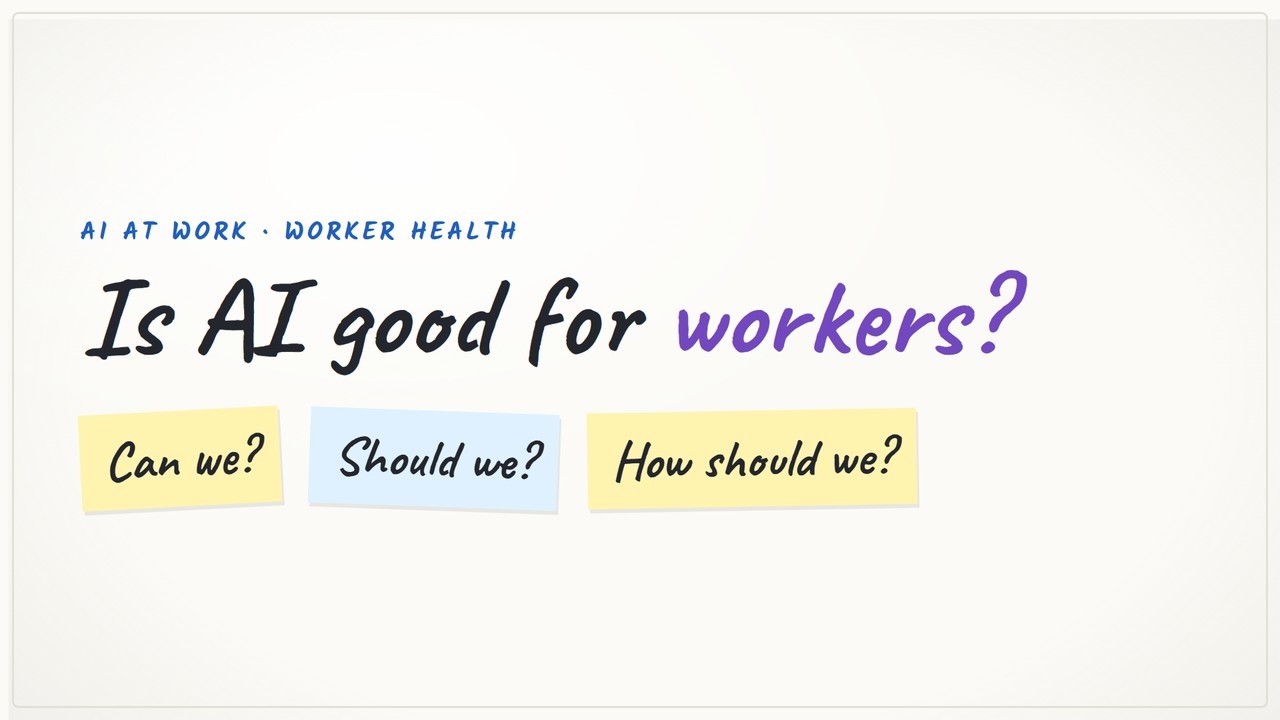
An agenda in Occupational Health Science, led by Tahira Probst and Mindy Shoss with scholars across the field (including a section by Louis Tay on flourishing), for aligning AI with worker safety, health, and well-being: stress and health, job insecurity, algorithmic management, workplace relationships, and ethical design.

Critical Thinking in AI Use explainer

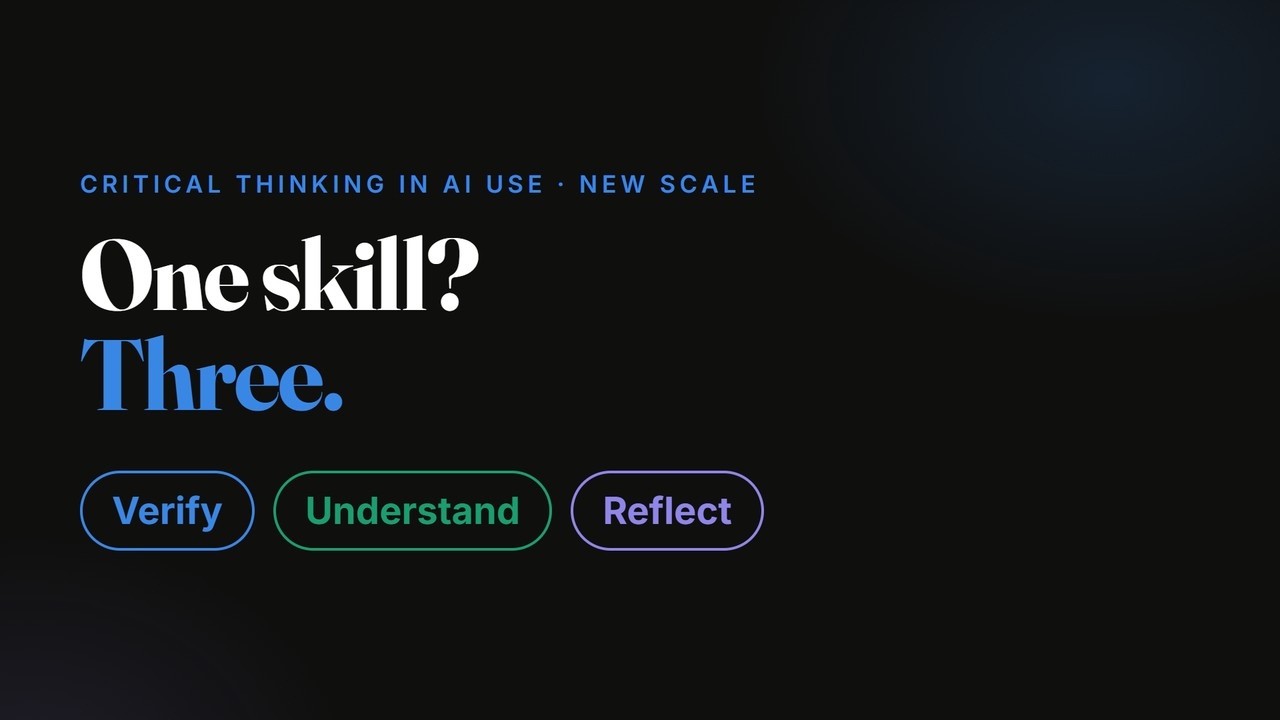
Critical Thinking in AI Use Is Three Skills, Not One

Research led by Gabriel Lau and colleagues developed the 13-item Critical Thinking in AI Use scale across six studies with 1,341 participants. It has three components: verification, motivation to understand how AI produces answers, and reflection on responsible AI.

Automated video interview personality explainer

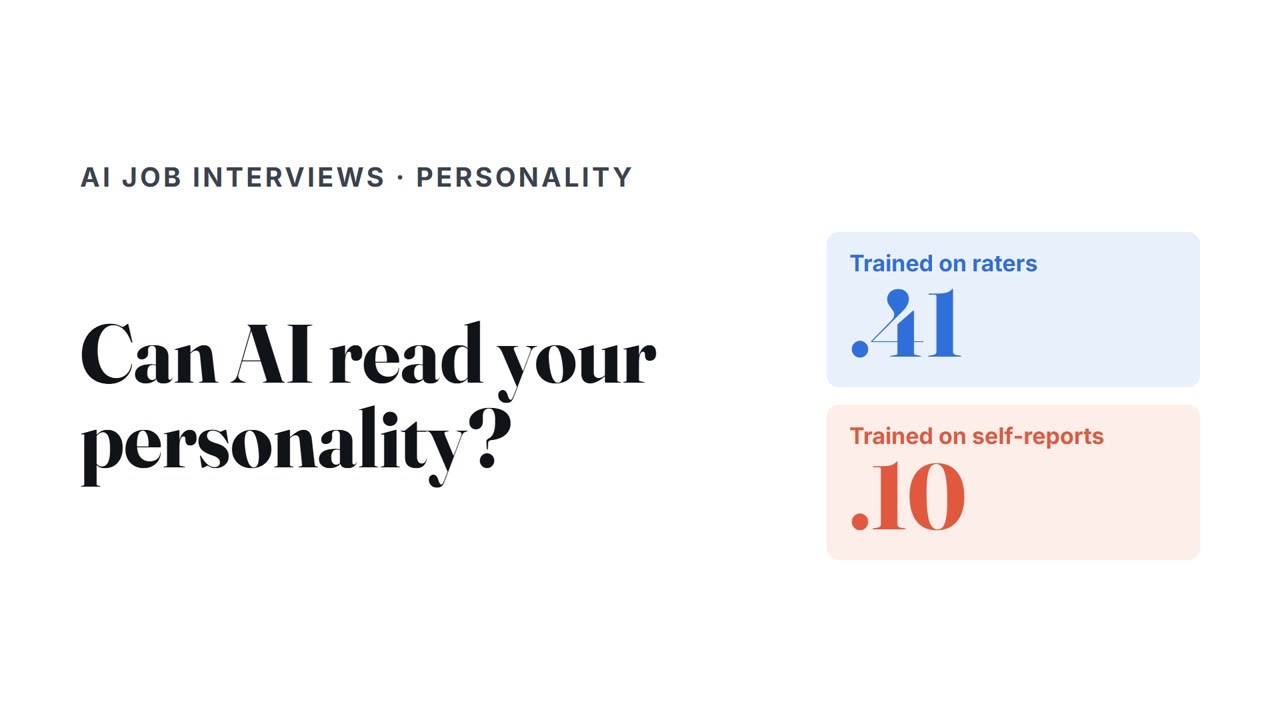
Can AI Read Your Personality From a Job Interview?

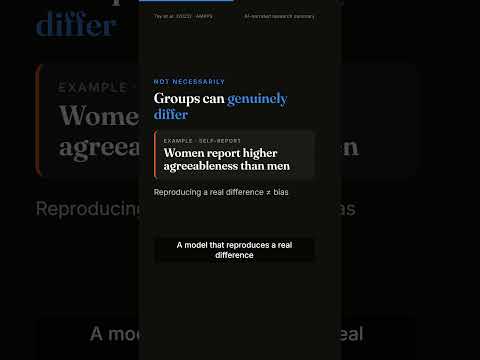
Research led by Louis Hickman, with Nigel Bosch, Vincent Ng, Rachel Saef, Louis Tay, and Sang Eun Woo, built automated video interview models of the Big Five across four samples of mock interviews. Models trained on interviewer impressions held up far better than models trained on self-reports, and extraversion was captured best.

VALID checklist explainer

Catching Bad Research Practices Early: The VALID Checklist

Co-led by Susanne Kerschbaumer and Ulrich S. Tran in a 31-author team that included Louis Tay, VALID turns the methods literature into a 91-item checklist, refined through a three-round Delphi study, for building validity into research from planning to reporting.

Would AI Hear Them the Same Way? Age-inclusive AI interviews explainer

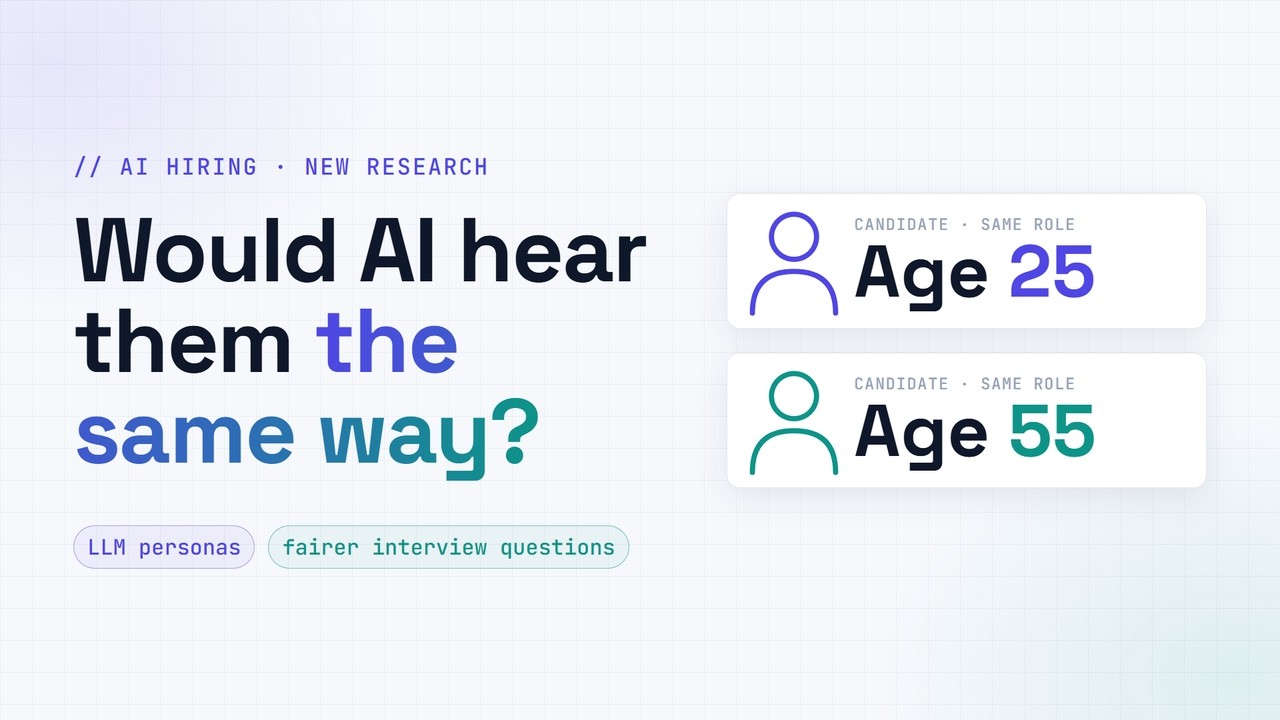
Would AI Hear Them the Same Way?

Jingyi Li, Daphne X. Hou, and Louis Tay recorded 368 working adults answering AI-scored video interview questions and found that age shaped both what people said and how they said it. They then built an LLM persona for every participant and used the personas as a low-cost test bed to rewrite the questions: some age gaps shrank sharply, others held, a reminder that simulation comes before, not instead of, human validation.

Does Dropping the SAT Remove Bias? explainer

Does Dropping the SAT Remove Bias?

Many colleges dropped standardized tests over concerns about bias. Sang Eun Woo, James LeBreton, Melissa Keith, and Louis Tay distinguish measurement bias from score gaps rooted in unequal opportunity, and show that the grades, essays, letters, and interviews left without the test are more open to bias and predict success less well.

Can Others Tell If You're Being Authentic? whiteboard explainer

Can Others Tell If You’re Being Authentic?

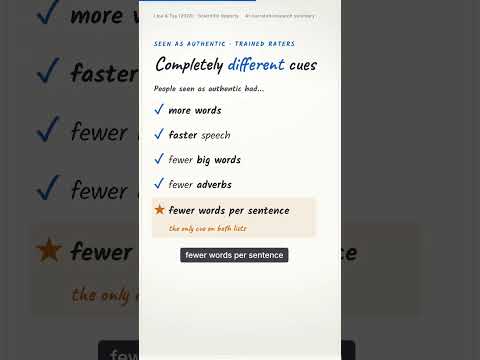
“Just be yourself” is common interview advice, but can anyone else tell? Gloria Liou and Louis Tay recorded 454 employed adults in video job interviews and used AI to analyze their words, voices, and faces. Authenticity showed up in words, not faces or voices, and the cues behind feeling authentic and being seen as authentic barely overlapped.

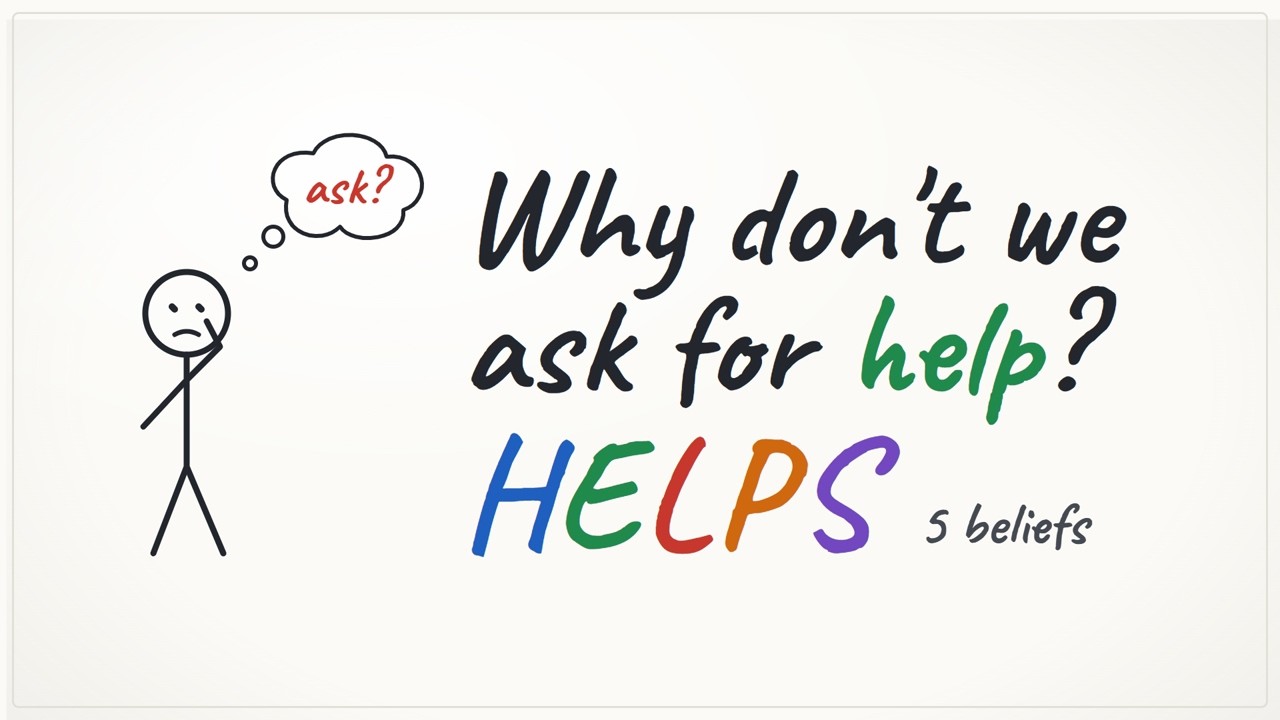
Why Don't We Ask for Help? The 5 HELPS Beliefs, whiteboard explainer

Why Don’t We Ask for Help? The 5 HELPS Beliefs

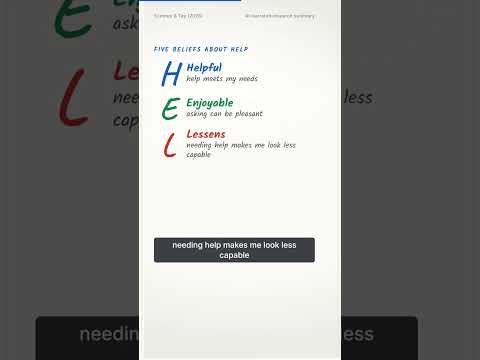
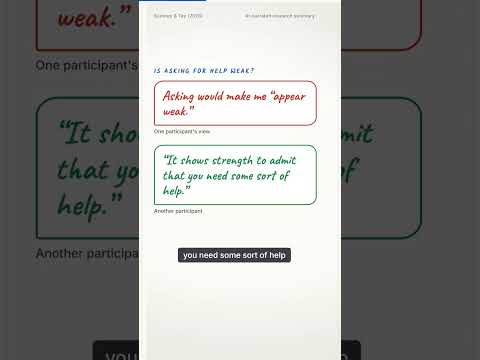
Why do some people reach out for help while others hold back? Across three studies, Victoria Scotney and Louis Tay identified five beliefs about seeking and receiving help (Helpful, Enjoyable, Lessens, indePendence, Safe). Trusting helpers and seeing help as enjoyable stood out in predicting help received and well-being.

The 7 Dimensions of Psychological Situations (CAPTION) explainer

The 7 Dimensions of Psychological Situations (CAPTION)

Psychology has the Big Five for people, but what about situations? Parrigon, Woo, Tay, and Wang started from thousands of everyday adjectives and converged on seven dimensions of situations: Complexity, Adversity, Positive valence, Typicality, Importance, humOr, and Negative valence.

Big Ideas in I-O Psychology

Classic papers, explained

A companion series on landmark studies in industrial-organizational psychology by other researchers, explained the same way.

Schmidt and Hunter 1998 explainer

What Best Predicts Job Performance? The .51 Explained

Schmidt and Hunter (1998) pulled together 85 years of research on 19 hiring methods and put cognitive ability tests at .51. In 2022, Sackett and colleagues revisited the corrections and put the figure at .31, starting a debate covered in a two-part follow-up.

Work-family conflict explainer

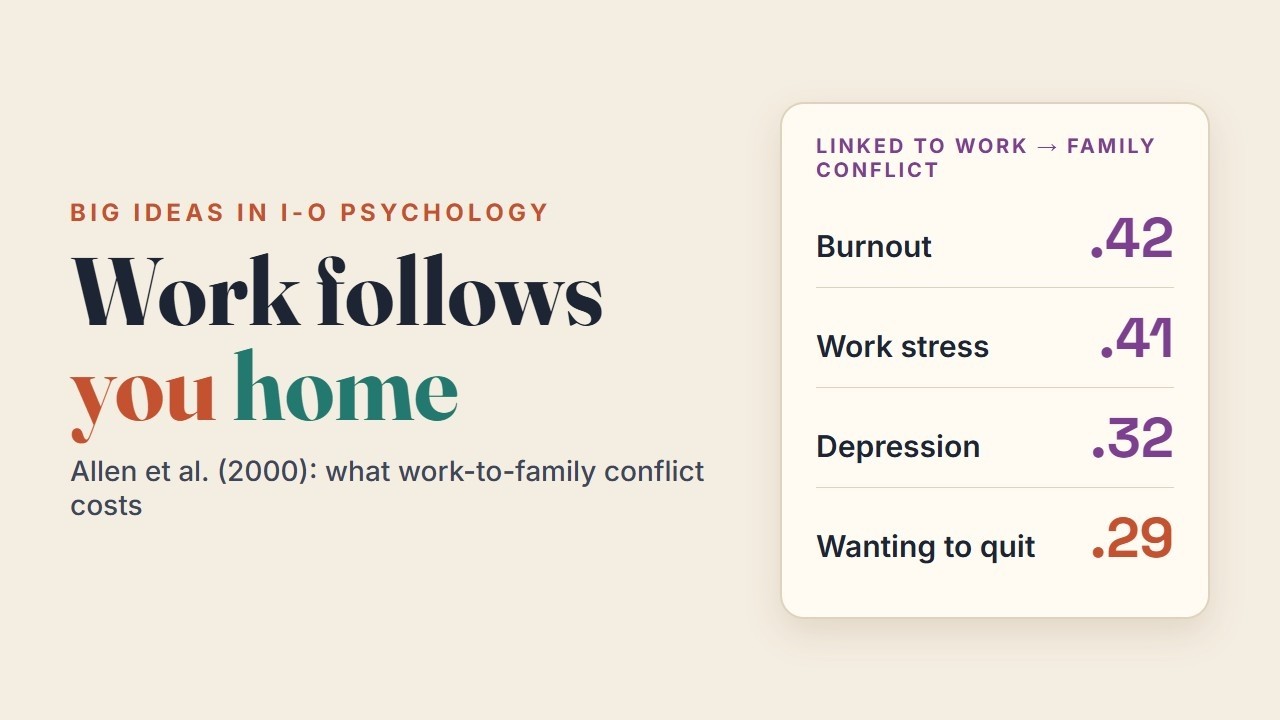
Does Your Job Follow You Home? Work-Family Conflict

Allen, Herst, Bruck, and Sutton (2000) reviewed 67 studies of work-to-family conflict. Higher conflict went with lower job, life, and marital satisfaction, and above all with stress: burnout, work stress, and depression.

Affective Events Theory explainer

Where Do Feelings at Work Come From? Affective Events Theory

Weiss and Cropanzano (1996) argued that feelings at work come mainly from events, not stable job features, and separated behavior driven by in-the-moment feelings from decisions driven by overall job attitudes, a cornerstone of the “affective revolution” in organizational research.

Shorts

Under a minute

These explainers were produced with AI assistance from the published papers and checked against them for accuracy. The narrator is a synthetic voice, not one of the authors.